


The fair will run until 18 October, with more than twenty authors and around fifteen bookshops and publishers taking part
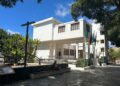
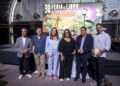
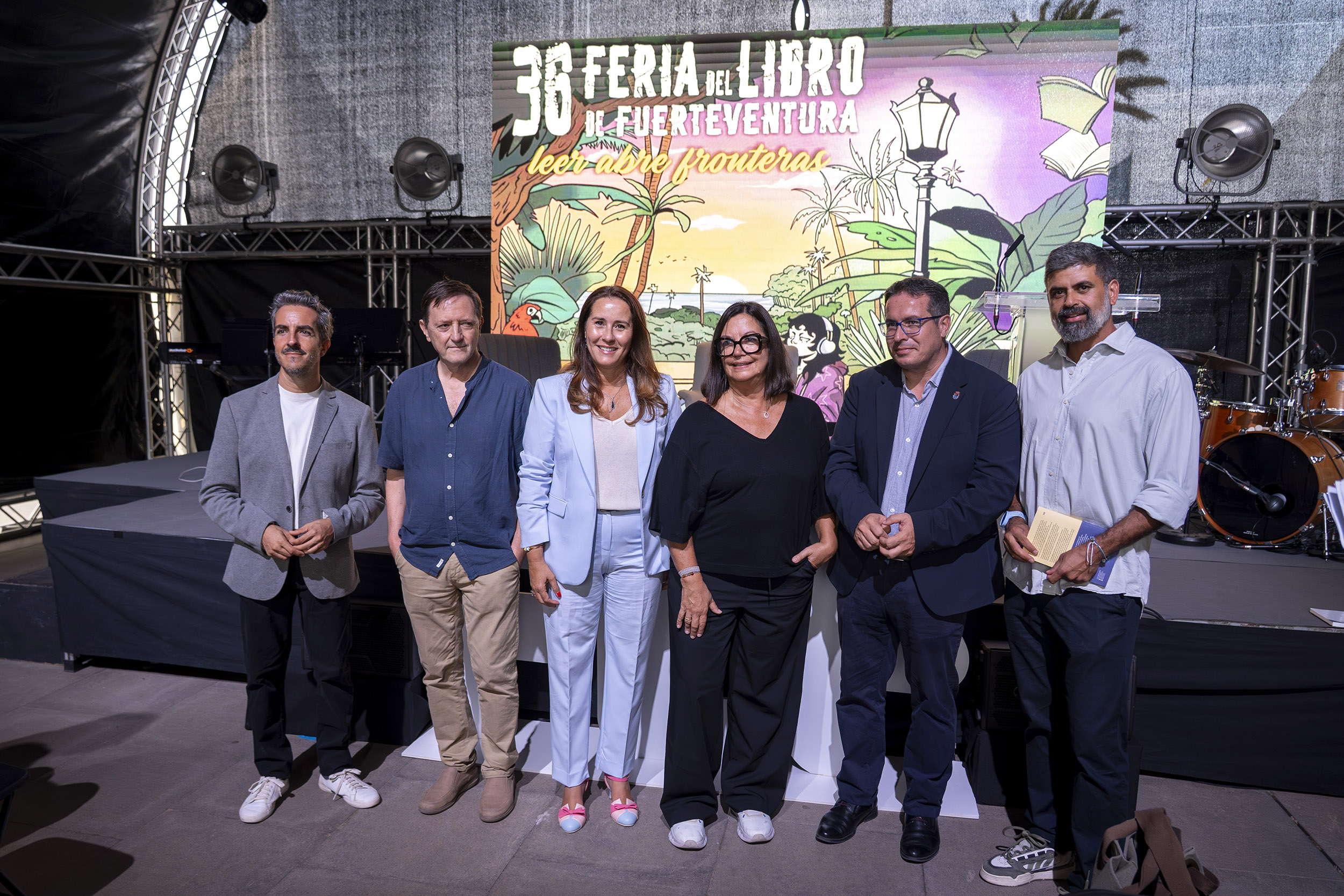
The square outside the Palacio de Formación y Congresos de Fuerteventura hosted the official opening of the 36th edition of the Fuerteventura Island Book Fair (Feria Insular del Libro) on Thursday 15 October. The programme will run until Sunday 18 October, with more than twenty authors and around fifteen bookshops, publishers and other organisations taking part.
In the words of the president of the Cabildo de Fuerteventura, Lola García: “Once again we are launching this fair, which is the island’s leading cultural and literary event. It brings together writers from all over the country and, as always, gives pride of place to our own island’s authors.”
The mayor of Puerto del Rosario, David de Vera, thanked the Cabildo “for consolidating an event that champions cultural diversity through bookshops, readers and writers, with strong demand for the literature that this Book Fair brings to Puerto del Rosario.”
As the councillor for Culture, Rayco León, explained: “More than a thousand schoolchildren have already taken part in activities this morning, and now the fair begins in earnest, bringing together bookshops, publishers and authors with the public, all with the aim of encouraging reading. There’s also a parallel programme of music, theatre, circus and dance, always inspired by books.”
Opening ceremony
The opening ceremony began with the contemporary circus show ‘Tenet’, performed by the Catalan company Eunoia Colektiva. This was followed by the ‘Reading opens borders’ dialogue in the Carpa Josefina Plá, bringing together journalist Àngels Barceló and writer Ignacio Martínez de Pisón. The conversation was moderated by journalist Nicolás Castellano (Cadena SER), an expert in migration and human rights.
The conversation brought together two voices from journalism and literature to reflect on current affairs, including the need to protect democracy against extremist rhetoric, and to explore the power of books to broaden perspectives, connect realities and bring readers closer to other people’s experiences.
During the dialogue, Àngels Barceló noted that this was the first time she had taken part in a book fair as a guest. “Making my book fair debut, and doing so here in Fuerteventura, is incredible for me,” she said. The journalist stressed the need to champion books as spaces that open the mind and foster critical thinking. “Books are essential. We need to know what has happened in this country; if we think of the mind as a frontier, then reading is necessary to fight hoaxes, lies and disinformation,” she argued.
For his part, Ignacio Martínez de Pisón said that he returns to Fuerteventura whenever he can, as he always feels “very warmly welcomed” there. The writer also referred to the presence of Margarita Yakovenko in the fair’s programme, and reflected on Spain’s transformation into a more plural, mixed and diverse society, very different from the one he knew in his childhood.
Martínez de Pisón also lamented the influence of social media in polarising ideological discourse, and stressed the need to appreciate the progress Spanish society has made. “The message we need to get across is that never in Spain’s history have we been as well off as we are now. Those of us here have never known war, and yet we still complain,” he said. The writer added that younger generations have not experienced the Spain in which their forebears grew up, and so lack the optimistic outlook on the future that, he noted, accompanied earlier generations.
This was followed by the presentation of the book Años Luz by Jacobo García, winner of the Anagrama Prize for Narrative Journalism (Premio Anagrama de Crónica), as well as the musical show Raíces Strad & Cía.
This morning also saw performances for schoolchildren by the Canarian companies Ali Wakhanda and Clapso, as well as storyteller Margarita del Mazo.
The Book Fair is organised by the Centro Bibliotecario Insular, part of the Cabildo de Fuerteventura’s Department of Culture, in collaboration with the Canary Islands Government’s Institute for Cultural Development (Instituto Canario de Desarrollo Cultural). The regional government’s Deputy Ministry for Social Welfare, Equality, Youth, Children and Family (Viceconsejería de Bienestar Social, Igualdad, Juventud, Infancia y Familia) is also taking part.