


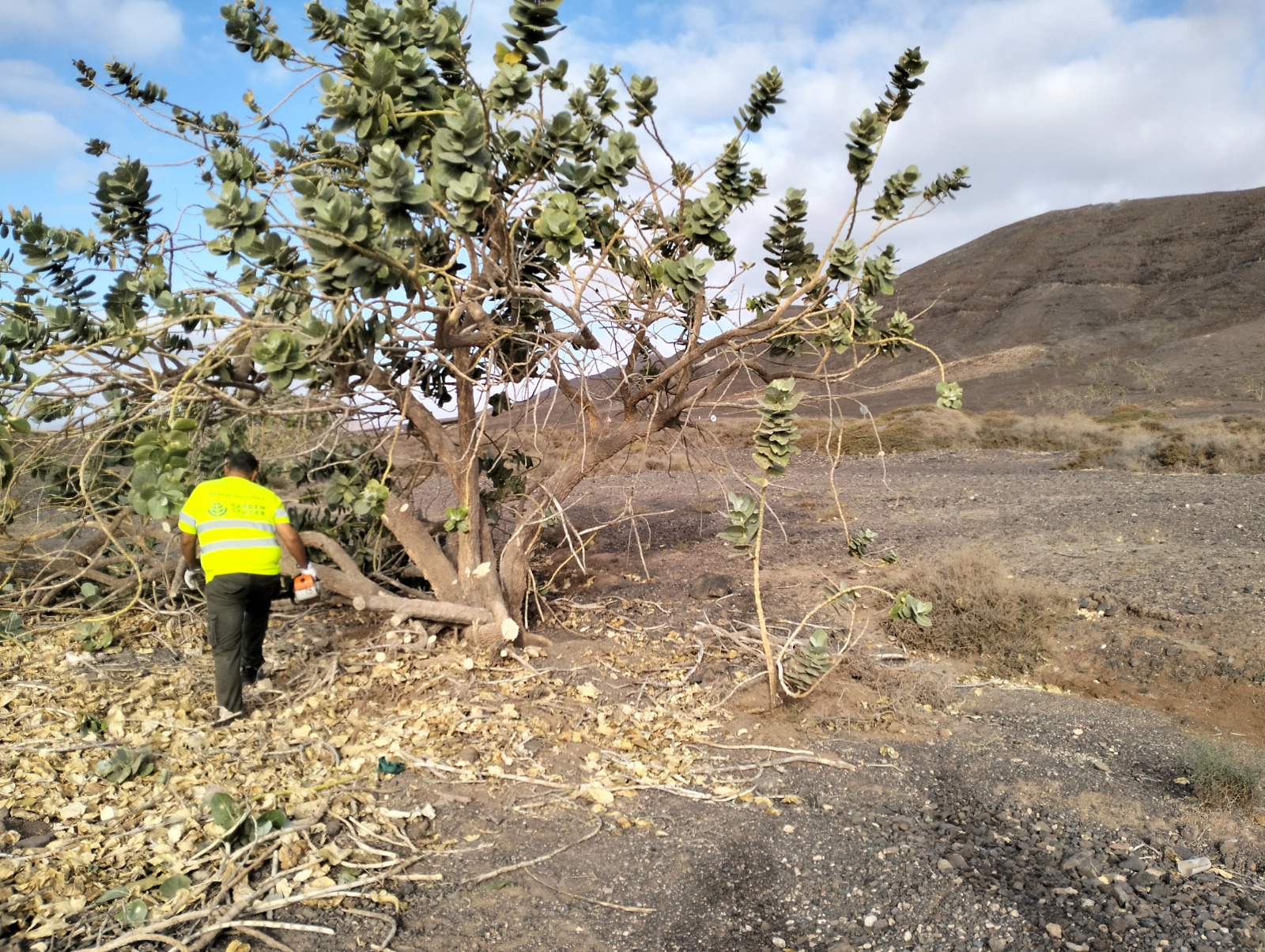
The measures have been carried out over almost a year, with nearly 7,000 specimens removed of a species that poses a serious threat to majorero ecosystems
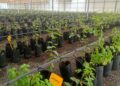
The Cabildo de Fuerteventura, through its Environment department, has successfully completed an ambitious project to control and eliminate the invasive species Calotropis procera, reeds and common reed grass. The work, carried out since December 2025, has involved locating, controlling, eliminating and monitoring these exotic species, along with waste management, clean-up operations, environmental restoration and measures to limit regrowth.
The measures focused on areas where Calotropis was particularly prevalent: roadside and path verges, gavias (traditional rain-fed farmland) and abandoned agricultural land, dry reservoirs and ravines. Priority areas were initially established around Pozo Negro, before being extended to other areas in the municipalities of Antigua, Tuineje and Pájara.
Controlling and removing Calotropis
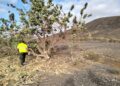
The plant Calotropis procera was the main focus of the operation, with a total of 6,934 Calotropis specimens removed by the time the project concluded. This is a species classified as invasive that poses a serious threat to the Canary Islands’ arid ecosystems. Its impact on nature includes displacing native flora, damaging endemic plant communities and altering habitats.
Both the president of the Cabildo, Lola García, and the Environment councillor, Carlos Rodríguez, stressed the importance of controlling and managing invasive exotic species to prevent their exponential spread and to support the recovery of native species, highlighting the work the island authority carries out continuously throughout the year in this area.
The operation was carried out on behalf of the Cabildo by its public agency GESPLAN. Before any specimen was treated, it was checked for flowers, fruit and seeds, which were removed by hand and placed in sealed bags to prevent their spread. The branches were then removed using a handsaw or chainsaw, the trunk was cut, and work was carried out on the stump and root system. Wherever accessibility and ground conditions allowed, the roots were completely removed using manual tools, vehicles or machinery. Where full extraction was not feasible, treatments were applied, mainly covering the area with securely fixed black plastic sheeting and, in later stages, applying salt to promote drying out.
To prevent regrowth, root removal efforts were reinforced and periodic follow-up checks were carried out to eliminate any new specimens emerging from seeds or regrowth following the initial interventions.
Common reed
From June onwards, a specific operation targeting common reed (Phragmites australis) was carried out at the Saladar de Jandía salt marsh. The intervention was planned selectively to reduce the reed mass while avoiding unnecessary impact on the salt marsh’s native vegetation. Work included mechanical and manual clearing, removal of residual growth, biomass removal and the installation of anti-regrowth black plastic sheeting, designed to block light and progressively reduce the ability of rhizomes and roots to regenerate.
The plant material generated was managed through shredding, chopping, stockpiling and transport to authorised facilities, mainly the Zurita Environmental Complex. During the work, urban waste and other materials found in the intervention areas were also removed, contributing to the overall upkeep of the sites involved.
The project falls under the Canarias FEDER 2021-2027 Programme, 85% co-funded by the FEDER (European Regional Development Fund).