


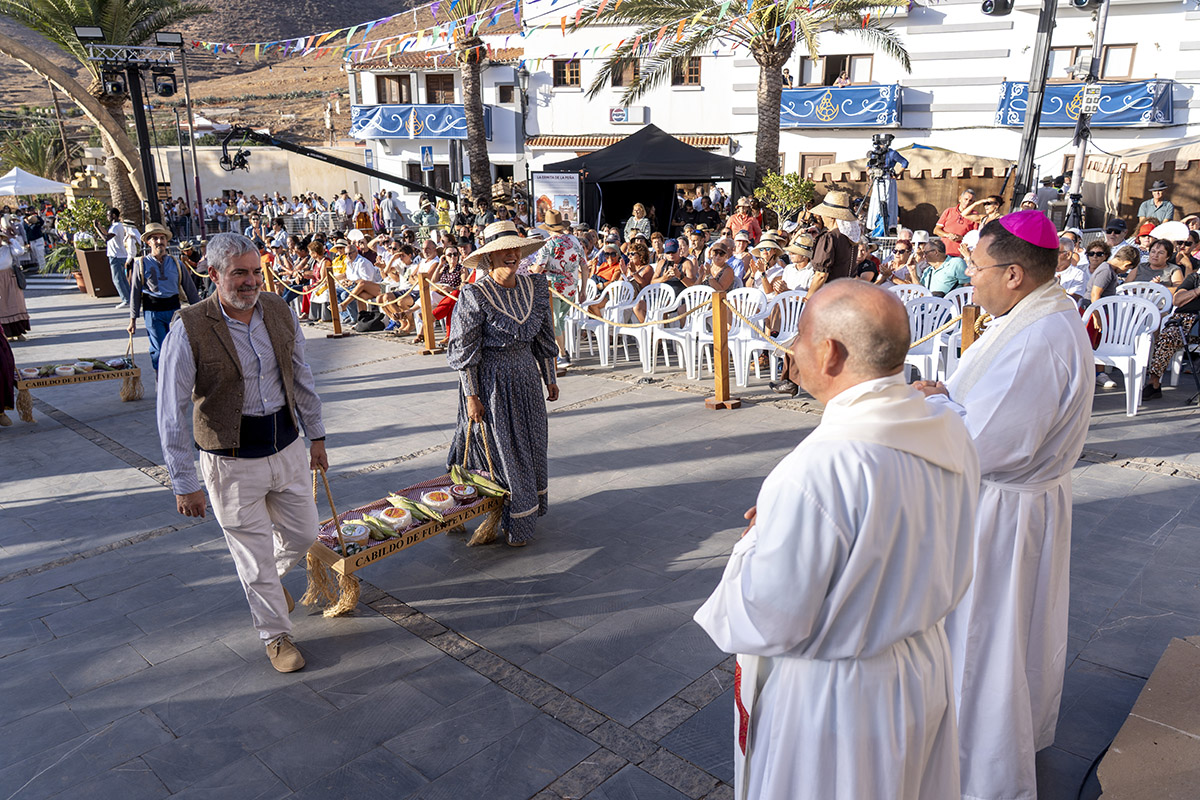
The procession featured institutional participation from the Cabildo, the six town councils, folk groups, associations and civil protection
Thousands of people from every corner of Fuerteventura made their way to Vega de Río Palmas as part of the Fiestas en Honor a Nuestra Señora de La Peña. As happens every third weekend of September, majorero paths and trails once again filled with pilgrims heading to the sanctuary of the Virgen de la Peña from early morning.
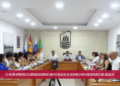
This afternoon saw the traditional Romería-Ofrenda take place, with institutional participation from the Cabildo de Fuerteventura, the six ayuntamientos, folk groups, neighbourhood associations and civil protection volunteers. From 4.30pm, pilgrims, folk groups and rondallas gathered ahead of the procession, setting off at 5.00pm from the police checkpoint in Vega de Río Palmas.
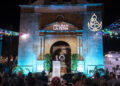
Upon reaching the sanctuary, the traditional offering to the Virgen de La Peña began. The first to take part were members of the Federación Canaria del Juego del Palo, who gave a demonstration before the Virgin, followed by the offering from civil protection volunteers representing the different municipalities.
The offering from the Cabildo de Fuerteventura was led by the island’s president, Lola García, and the President of the Government of the Canary Islands, Fernando Clavijo, accompanied by the Agrupación Folclórica de La Oliva. The island Corporation’s institutional float paid tribute to stonemasons, farmers and quarrymen, honouring one of the island’s oldest and most respected trades, with the bell tower of the Iglesia de Nuestra Señora de La Peña as its centrepiece.
The Ayuntamiento de Betancuria’s participation was led by its mayor, Enrique Cerdeña, and councillor José Cerdeña, accompanied by the Asociación Cultural Morro de la Cruz. The municipality’s float paid tribute to the tradition of basket-weaving, a symbol of majorero land and its roots.
Afterwards, the Ayuntamiento de La Oliva presented its offering alongside the Agrupación Folclórica Dunas de Corralejo, with a float depicting the traditional Canarian ‘destiladera’, an old domestic system used to filter rainwater.
Next came the Ayuntamiento de Pájara, accompanied by Parranda La Sebada and the Grupo de Baile A.C. Erasmo Hernández, with a float paying tribute to the majorero primary sector, representing activities and products linked to agriculture, livestock farming and fishing.
Then came the turn of the Ayuntamiento de Antigua, accompanied musically by the Rondalla del Centro de Mayores de Antigua, with the allegorical float ‘Trillada, Tostada y Moliendo’ (Threshed, Toasted and Ground).
Meanwhile, the Ayuntamiento de Puerto del Rosario presented its offering with the float ‘Del Rosario a La Peña’, featuring a representation of the Iglesia del Rosario as a symbol of the majorero capital, accompanied by music from the Agrupación Folclórica de Tetir.
The Ayuntamiento de Tuineje’s float centred on traditional units of measurement such as fanegas and quintales, historically used to weigh potatoes, tomatoes and onions at village market stalls. This offering was accompanied by music from the Parranda Muelle Nuevo.
Finally, offerings were presented by residents of the Asociación FACAY de Tefía, the Asociación El Bernegal, the Asociación Folclórica Las Goteras de Santa Brígida and the Asociación Cultural Erasmo Hernández de Telde.
Following the Ofrenda, the group Aseres took to the stage, followed by the traditional fireworks display and a large open-air party (verbena) featuring Tonny Tun Tun y su Orquesta, Orquesta Banda Nueva and Grupo Bomba.